Aloe Haworthia 🌱
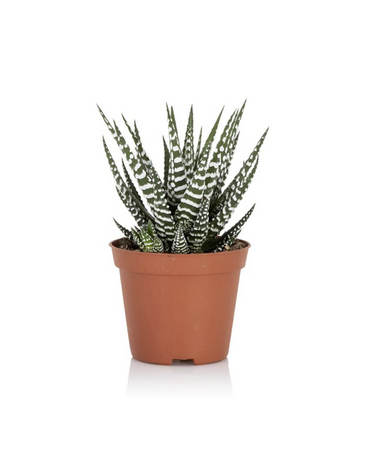
Small but mighty, Haworthias are hardy succulents with striking patterned leaves that look right at home in any setting. Whether displayed solo on a coffee table or grouped together in different sizes to create your own little succulent family, they’ll add effortless style to your space.
They pair beautifully with our bespoke pots, making them as giftable as they are collectable.
Plant Notes.
-
Temperature: Thrives in normal room temperatures (15–25°C). Keep away from frost.
-
Feed: Use a cactus/succulent fertiliser once a month in spring and summer.
-
Also Known As: Zebra Cactus, Pearl Plant, Star Window Plant, Cushion Aloe.
-
Origin: Native to Southern Africa.
Plant Care
-
Light: Bright light with some direct sun, introduced gradually.
-
Watering: Allow the compost to dry well between waterings; reduce watering in winter.
-
Temperature: Keep away from frost and cold draughts; requirements vary by variety.
-
Humidity: Normal household humidity is generally suitable.
-
Feed: Feed sparingly during active growth, using a product appropriate to the plant variety.
Meet Your Plant
-
Growth: Slow-growing, architectural growth; form varies with the variety.
-
Pet Safety: Keep away from pets and children; some parts may be harmful if eaten.
-
Botanical Name: Aloe Haworthia
Living plants naturally vary in size, shape and colour. Check the product options for supplied pot dimensions where available.